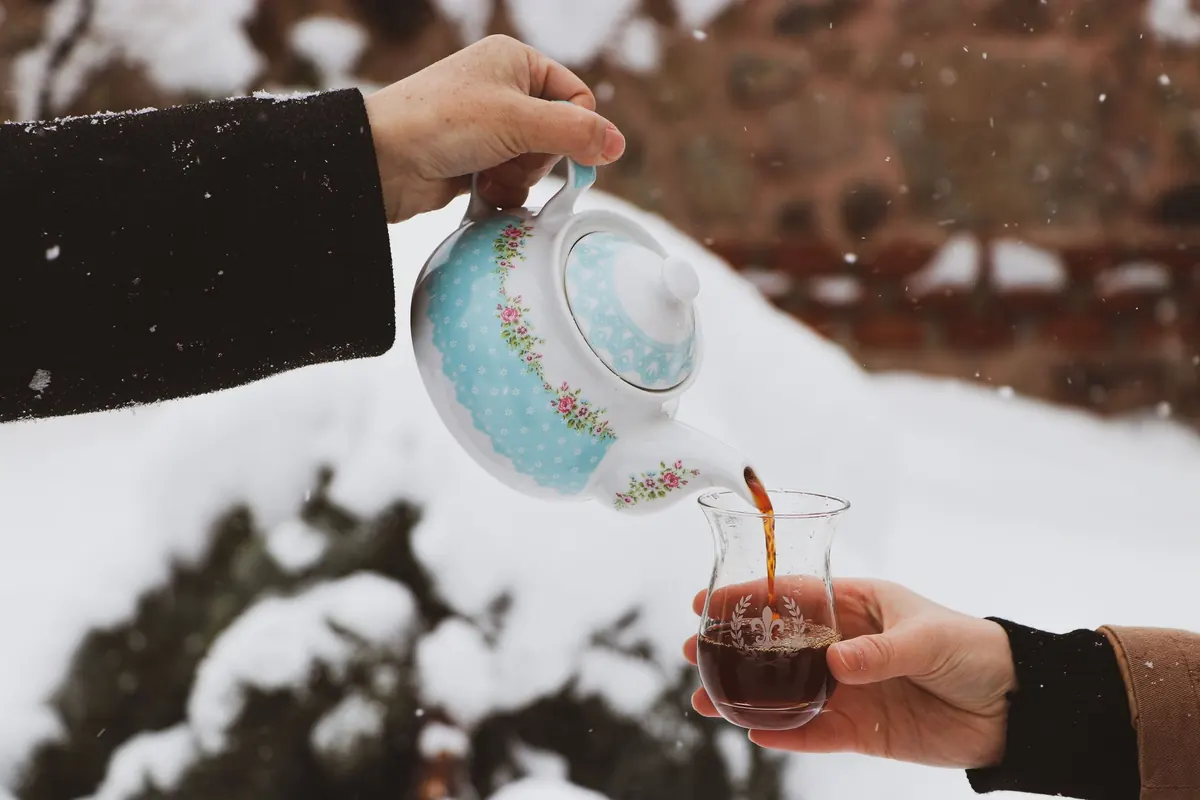
Tea is the small ceremony that holds the British day together. It marks the start of the morning, the pause mid-afternoon, the offer made to anyone who walks through the door in a moment of trouble. Ask ten people how to make it and you will get ten answers, several of them delivered with genuine feeling. Yet the arguments nearly always come down to three things: the water, the timing, and the order in which the milk goes in. Get those right and the rest is detail. Get them wrong and you have a cup that tastes thin, stewed, or somehow both at once.
Start With the Water
Use freshly drawn cold water. Water that has been boiled, cooled, and boiled again has lost much of the dissolved oxygen that makes a cup taste bright, and the result is flat regardless of how good your tea is. Fill the kettle with roughly what you need rather than a full reservoir, and if you have hard water, descale the kettle now and then. Limescale does nothing for flavour.
If your tap water is very hard, a filter jug will improve the taste noticeably, and so will solving any film of scum on the surface of the cup. Very soft water has its own problem: tea brewed in it can taste slightly metallic and thin. There is no perfect water, only better and worse. Fresh is the main rule.
If you are using a teapot, warm it first. Half-fill it with hot water, swirl it around, and tip it away. Tea poured into a cold pot loses heat immediately and steeps unevenly. The same trick works for a mug, and it costs you ten seconds.
Water Temperature: Just Off the Boil for Black Tea
British blends, whether English Breakfast, Assam, or a strong supermarket own-brand, are built for water at or very near boiling. Pour as soon as the kettle switches off, or give it twenty or thirty seconds to settle. That brief pause makes a real difference with a delicate blend and almost none with a robust one.
Green tea and white tea are the exception. Boiling water scalds the leaves and pulls out bitterness that was never meant to be there. Let the kettle stand for two or three minutes, or pour the water into a jug first and then onto the leaves. Aim for something in the region of 70–80°C. Oolong sits in the middle, around 85–90°C.
If you have no thermometer, learn the sound. A kettle that is still rumbling has not reached temperature; the click and the sudden quiet is your cue.
How Much Tea to Use
The old rule is one teaspoon per person and one for the pot. That still works, with the caveat that it assumes a teaspoon of loose leaf and a cup of roughly 250ml. Tea bags are dosed for a single mug, so one bag is enough; two will not make a better cup, only a stronger and more bitter one.
- One heaped teaspoon of loose leaf per 250ml of water.
- One extra teaspoon if you are making a pot for three or more.
- Give the leaves room. A cramped infuser steeps unevenly, and the outside of the clump gives up everything while the middle gives up nothing.
- Keep loose tea in a tin, away from light and strong smells. Tea absorbs the odours around it, which is why a bag of leaves left open beside the coffee will taste faintly of coffee.
Timing: Three to Five Minutes, and Not a Second More
Black tea needs three to five minutes. Under three and you have coloured hot water that tastes mostly of milk. Over five and the tannins take over, leaving a drying, stewed cup that no amount of sugar will rescue. Within the window, use your judgement: an Assam or a strong breakfast blend is happiest at four to five minutes, a Darjeeling first flush at about three, and an Earl Grey at three to four, since bergamot turns sharp when left too long.
Green tea wants two to three minutes at a lower temperature. Set a timer rather than guessing, at least until you know your own kettle and your own taste. Then take the leaves or the bag out. A bag left sitting in the mug means the first half of the drink and the second half are two different drinks, and the second one is worse.
Milk: Before or After?
This is the argument that never ends, and the honest answer is that both orders work — they produce slightly different cups, and the choice is mostly about control.
Milk after
Pour the tea, then add milk. You can watch the colour change and stop when it looks right, which is the most reliable way to get the strength you actually want. This is what most people do, and it is the easier method by a distance.
Milk before
Put the milk in the cup first, then pour the tea onto it. The story usually told is that it protected fine china from boiling water and helped households stretch a small amount of milk further. There is a practical advantage, too: the jet of tea mixes the milk through the cup without any stirring. The disadvantage is that you are committing to a strength before you see the colour, so it takes practice.
Two rules matter more than the order. Milk goes in the cup, never in the pot — it changes how the leaves infuse and dulls the brew. And milk does not belong in green tea, white tea, or most oolongs. Lemon and milk together will curdle, so pick one.
A Reliable Order of Operations
- Fill the kettle with fresh cold water and switch it on.
- Warm the pot or mug with hot water, then empty it.
- Add your leaves or bags.
- Let the kettle settle for half a minute for black tea, longer for green.
- Pour the water over the tea.
- Time it: three to five minutes for black, two to three for green.
- Remove the leaves or bag, then add milk to taste.
When It Goes Wrong
Weak despite a long steep. The water was not hot enough, or there was not enough leaf. More time will not fix either; it only adds bitterness.
Bitter and drying. Too hot, too long, or the bag was squeezed against the side of the mug. Let it drain instead.
A dull film on top. Hard water. A filter jug or a different blend helps.
Flat and lifeless. Old tea, or water that has been boiled more than once.
The Practical Bit
Buy tea you like, use it within a few months, and make one cup properly rather than a large pot carelessly. Taste the tea before the milk goes in, at least every so often, so you know your brewing is right and the milk is only finishing the job. Then adjust to your own taste — a cup that suits you is the only correct cup, whatever anyone's grandmother says. If you drink tea with a lot of sugar or milk and you are watching your intake for health reasons, it is worth speaking to a doctor or dietitian about what fits your situation.
Photo: hayriyenur . / Pexels