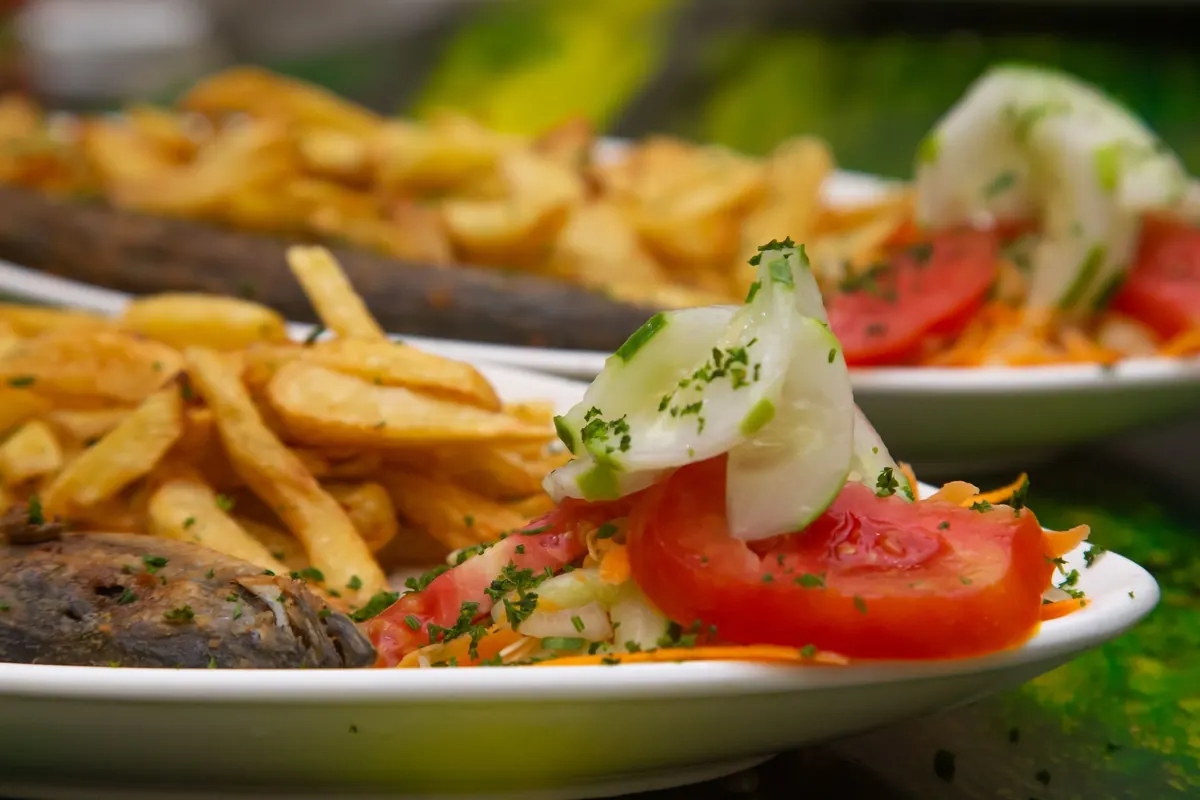
There are few better evenings than one built around a hot, salty plate of fish and chips eaten at home. It is also easy to get wrong: batter that slides off, chips that go pale and floppy, a kitchen that smells of old oil for a week. None of it is inevitable. Get the oil temperature right, mix the batter at the last minute, and cook the chips in two stages, and you will turn out something close to a decent chippy tea.
First, the fish
Buy thick, even fillets. Cod and haddock are the classics, but coley, pollock and hake all fry well and cost less. Ask for pieces of roughly 150–180g, cut from the thick part of the loin rather than the thin tail, because a thin tail overcooks before the batter has browned. Skin off, bones out.
Keep the fish in the fridge until the last moment. Cold fish hitting hot oil gives you a burst of steam, and that steam is what lifts the batter away from the flesh and keeps it crisp rather than greasy. Pat each fillet bone dry first. Do not salt it beforehand: salt draws water to the surface, and water ruins batter. Season once it is out of the oil.
If you are buying frozen fish, thaw it overnight in the fridge, then drain it well and dry it thoroughly with kitchen paper. Any ice or surface water will cool the oil and make the coating slide. For a crowd, choose one type of fish rather than a mixture; it cooks more evenly and makes timing simpler. A thick fillet of cod may need six minutes, while a thinner pollock fillet may be done in four, so keep pieces roughly the same size.
The batter: cold, lumpy, last minute
A good frying batter is technique more than recipe. Mix 100g plain flour, 50g cornflour, a teaspoon of baking powder and a good pinch of fine salt, then whisk in about 175ml of very cold lager or sparkling water. Stop while it is still slightly lumpy. Overworking develops gluten, which makes the coating tough.
The details matter. Cornflour fries to a harder, glassier crust than plain flour alone. Baking powder gives a little lift in the oil. The cold liquid creates the steam. For extra crispness, swap a tablespoon of the beer for vodka, which evaporates faster than water and leaves a drier shell. For a gluten-free version, use rice flour in place of the plain flour and keep the cornflour.
Mix it just before you fry. If you must do it ahead, chill it for no longer than half an hour and loosen it with a splash more cold beer.
A useful test is to dip a finger in the batter: it should coat thinly, like double cream, not cling in a thick paste. If it is too thick, add a little more cold liquid; if too thin, a spoonful more flour. A pinch of curry powder or paprika can add colour and a faint warmth, but keep the batter simple so the fish still tastes of fish.
Cold batter, hot oil, dry fish. Those three rules will save more fish suppers than any expensive equipment.
Frying without fear
You do not need a deep-fat fryer. A deep, heavy saucepan filled no more than a third full — about 6cm of oil — is safer and easier to control. Rapeseed or sunflower oil is neutral and takes heat well; beef dripping gives the fuller flavour of a proper chippy. Bring it to roughly 185°C. A thermometer removes the guesswork, but a cube of bread should fizz on contact and brown in about a minute.
Dust each dry fillet in seasoned flour, shake off the excess, then dip it in the batter and let the surplus run back into the bowl. A thick sleeve of batter stays raw in the middle. Lower the fish into the oil away from you, holding it for two or three seconds before letting go, so it does not sink and stick to the base of the pan.
Fry two fillets at a time at most. A crowded pan drops the oil temperature, the batter turns greasy, and the fish steams rather than fries. Turn the fish once after two or three minutes, using tongs or a slotted spoon. It is ready when the crust is deep golden and rigid, and the fish feels firm. Drain on a wire rack set over a tray rather than on kitchen paper alone; paper traps steam against the bottom and softens the crust.
Between batches, skim out any stray batter with a slotted spoon. Blackened crumbs left in the oil will burn and flavour the next fillet. If the oil starts to smoke, it is too hot: turn off the heat for a minute before continuing. If the batter barely sizzles, wait until it comes back up to temperature. Never leave a pan of hot oil unattended, and never add water to it.
The chips: blanch, cool, blast
The chips deserve as much attention as the fish. Choose floury potatoes such as Maris Piper, King Edward or Russet. Peel them if you like, or scrub and leave the skins on for a rustic edge. Cut them into thick fingers, about 1.5cm wide, and drop them into cold water to rinse off surface starch. Drain and dry them thoroughly; wet chips spit and refuse to crisp.
Cook the chips in two stages. First, blanch them in oil at about 140–150°C for five to eight minutes, until they are soft and pale but not coloured. Lift them out and let them cool and steam-dry on a rack. This can be done an hour or two ahead. When you are ready to serve, raise the oil to 180–190°C and fry the chips again for two or three minutes, until they are golden and crisp. Drain, then salt immediately.
If you have no thermometer, use the bread test for the second fry and simply cook the first stage until the chips are floppy but not brown. For a lighter, crunchier chip, chill the blanched chips in the fridge for half an hour before the second fry. Oven chips are a fallback, but they will never have the same fluffy middle and crisp shell.
Sides, sauces and drinks
A fish and chips night is not just fish and chips. The right sides make the plate feel complete without turning dinner into a project. Mushy peas are the classic: simmer frozen peas with a knob of butter, a few mint leaves and a splash of vinegar, then crush them roughly with a fork or pulse them briefly. Tartare sauce is simply mayonnaise with chopped capers, gherkins, lemon juice and parsley. Pickled onions, curry sauce and a wedge of lemon are all welcome.
For drinks, strong tea is the traditional choice, but a cold lager, dry cider or crisp white wine works well too. If you are serving children or non-drinkers, sparkling water with lemon cuts through the batter nicely. Set the table with malt vinegar, flaky salt, brown sauce and lemon wedges, and warm the plates in a low oven while the last batch fries. Fish and chips wait for no one: serve the moment everything is drained and salted, because the crust starts to soften as soon as it stops steaming.
Finally, keep the cleanup in mind. Let the oil cool completely, strain it through a fine sieve into a jar if you plan to reuse it once or twice, and wipe the pan before washing. A little planning before the oil goes on makes the whole evening feel less like a takeaway rescue and more like a proper treat at home.
Photo: Audy of Course / Pexels