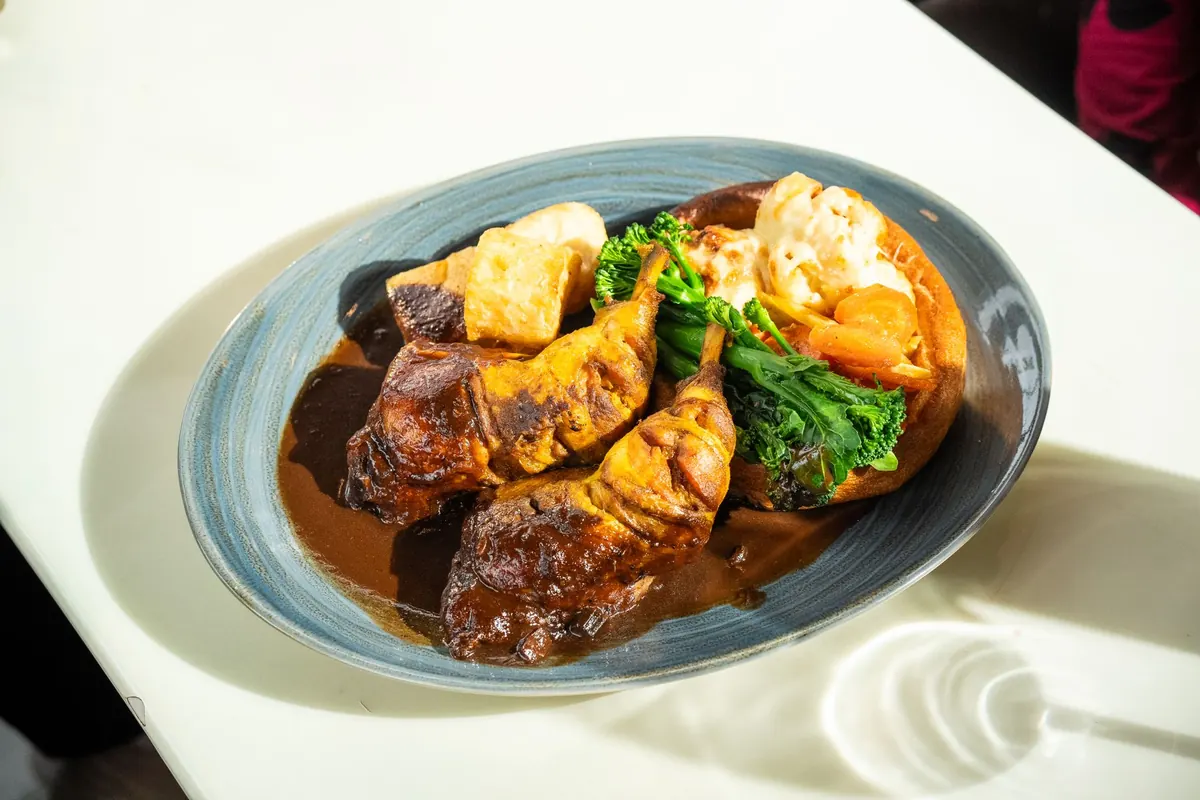
A Sunday roast is less a recipe than a small piece of logistics. Somewhere in the middle of it there is a joint of meat, a tray of potatoes doing something undignified in hot fat, a pan of gravy that demands attention at exactly the wrong moment, and a table of people who are already hungry. Get the order right and the whole thing looks effortless. Get it wrong and you serve lukewarm beef, pale puddings and a gravy that tastes of nothing much.
What follows is the anatomy of the meal: what each part is actually for, and how to get everything to the table hot and in the same half hour.
Start With the Meat
The joint sets the tone, and it also sets your oven temperature, which is why it comes first in the plan. Beef on the bone — rib, or sirloin — gives the best flavour, though a boned and rolled topside is cheaper and easier to carve. Lamb leg is forgiving and quick; shoulder needs three hours and a fork. Pork loin wants its skin dried out overnight in the fridge, uncovered, so it can crackle. A whole chicken is the cheapest way into the whole business and the most likely to be cooked badly.
Salt the meat the day before if you can, and leave it uncovered in the fridge. That does two things: it seasons properly through the joint, and it dries the surface so it browns rather than steams. Bring it out an hour before it goes in.
Roast at around 180°C fan for most joints, hotter for the first twenty minutes if you want a darker crust. A meat thermometer takes the guesswork out: roughly 55–60°C in the centre for beef you want pink, chicken cooked through with clear juices, pork firm but still juicy. Resting is not optional. Twenty minutes under foil for a small joint, thirty to forty for a big one. The internal temperature climbs as it sits, and the juices redistribute instead of flooding the board.
Potatoes, Puddings, and the Rest of the Plate
Roast potatoes
Floury varieties — Maris Piper, King Edward, Rooster — give you the ragged edges that go crisp. Peel and cut them into halves or quarters of roughly equal size, then parboil for eight to ten minutes until the outside is soft enough to scuff. Drain, leave in the colander for a minute to steam dry, then shake them about so the surfaces roughen.
Get your fat properly hot before the potatoes go anywhere near it. Beef dripping or goose fat if you have it, a neutral oil if you don't. A tablespoon or two per potato, tray in the oven at 200–210°C until it is shimmering, then tip the potatoes in carefully and turn them so every side is coated. Forty to fifty minutes, one layer, not crowded, turned twice.
Yorkshire puddings
The batter is equal volumes of egg, plain flour and milk — measure by volume rather than weight and it will always work. Whisk until smooth, then leave it to rest for half an hour. The trick is heat: a teaspoon of oil in each hole of the tin, the tin in a hot oven until the oil is almost smoking, batter poured in quickly, then the door shut and left shut for twenty minutes. They will rise around the meat and collapse if you peek.
Vegetables
Three is plenty. One roasted alongside the potatoes — carrots, parsnips, a halved onion. One green, cooked fast in salted water for three or four minutes so it still has bite. And one that needs no last-minute attention: braised red cabbage, cauliflower cheese, swede mashed with butter. Boiling greens for fifteen minutes is the single most common way to ruin an otherwise good plate.
Sauces and stuffings
- With beef: horseradish cream, English mustard, a little mustard powder stirred into the batter.
- With lamb: mint sauce, redcurrant jelly, or both.
- With pork: apple sauce, sage and onion stuffing, mustard.
- With chicken: bread sauce, sausages wrapped in bacon, a lemon halves inside the cavity.
Gravy: The Bit That Binds
Gravy is where a roast is won or lost, and it is almost always made too thin and too pale. When the meat comes out, tip the tin slightly and spoon off the excess fat, keeping a couple of tablespoons behind. Put the tin on the hob over a medium heat and add a spoonful of flour, working it into the fat with a wooden spoon for a minute. Splash in wine, cider or a little stock and scrape hard at the bottom — all that dark, sticky business is the flavour.
Add proper stock, a litre or so for a big joint, and simmer until it coats the back of a spoon. Strain it if you want it glossy. A teaspoon of redcurrant jelly or a little Marmite will rescue a gravy that tastes flat; a long simmer will rescue one that tastes watery. Keep it hot in a jug and pour at the table, not in the kitchen.
Timing: Work Backwards From the Table
Decide when you want to eat, write it down, and count backwards. Everything else follows from that.
- The day before: salt the meat, make stock, peel potatoes and keep them in cold water, make stuffing and any braised vegetable.
- Three hours before: take the meat out of the fridge.
- Two and a half hours before: meat in the oven. A chicken takes about eighty minutes, a leg of lamb an hour and a half, a rib of beef an hour and a half to two hours.
- An hour before: parboil the potatoes.
- Fifty minutes before: potatoes into the hot fat, on the top shelf.
- Forty minutes before: meat out onto a warm board, covered, resting. Turn the oven up for the Yorkshires.
- Thirty minutes before: Yorkshire batter into the tin. Start the gravy in the roasting tin. Put serving dishes in to warm.
- Ten minutes before: greens on, sauces out, plates warm.
- At the table: carve, pour, sit down.
The oven is your bottleneck, so use it cleverly. Roast the meat at 180°C for most of its time, then blast the potatoes at 210°C on the top shelf while the meat rests. The Yorkshires go in when the meat comes out, which is exactly when you need the high heat anyway.
Three Things That Usually Go Wrong
The meat is dry. Almost always overcooked rather than undercooked, and almost always because it wasn't rested. A thermometer and a timer solve both problems.
The potatoes are soggy. Either the fat wasn't hot enough, the tray was too crowded, or the potatoes were still wet when they went in. Any of the three will steam them instead of roasting them.
The gravy is thin and beige. Not enough reduction, not enough colour on the bottom of the tin, or flour added to cold fat. Get the tin hot, scrape the base, and let it simmer down.
The Practical Bit
Cook the same roast four or five times and it stops being an event and becomes a routine you can run on autopilot. Pick one joint, one potato, one green vegetable, and repeat until the timing lives in your head. Then start adding: a second vegetable, a different sauce, a pudding you make ahead on Saturday.
And keep the guest list realistic. A roast for four in a normal kitchen is a pleasure. A roast for ten is a catering job, and the meat will be cold before it reaches the far end of the table unless you carve in the kitchen and send plates out hot. There is no shame in that. The best Sunday roasts are not the most ambitious ones — they are the ones where everything arrives at once, the gravy is dark and generous, and nobody is still standing at the hob while the rest of the table starts eating.
Photo: The Castlebar / Pexels