A crumpet and an English muffin sitting side by side on a plate look like cousins. Then someone tries to butter them and the whole illusion collapses. The crumpet drinks butter through its open top; the muffin wears it on the surface like a coat. One is batter, one is dough. One is a sponge, one is a bread. Knowing which is which changes how you toast them, what you put on them, and when in the day they belong on the table.
What Each One Actually Is
A crumpet starts life as a loose, yeasty batter. It gets poured into metal rings set on a hot griddle, where bubbles rise and burst across the surface, leaving that familiar honeycomb of holes. The crumpet is flipped briefly to set the top, so the base stays smooth and pale while the top is open and spongy. It's cooked, not baked, and it never develops a crust worth mentioning.
An English muffin is a dough — kneaded, rolled, cut into rounds and proved. It's cooked on a griddle or baked until brown on both flat sides, usually dusted with semolina or polenta so it doesn't stick. No holes on the surface. Instead the air pockets hide inside, which is why a split muffin looks like a tiny cave system.
- Crumpet: batter, rings, griddled, holey top, smooth base.
- English muffin: dough, cut rounds, griddled or baked, flat and browned on both sides.
- Giveaway test: if it has visible holes on top before toasting, it's a crumpet.
Texture: Holes, Crumb and Chew
Fresh from the toaster, a crumpet is soft, springy and faintly custardy in the middle. The holes run deep, so the whole thing collapses gently under your teeth. There's a slight chew at the pale base, and if you've toasted it well, a crisp rim where the ring once sat. Eat one cold and you'll understand why nobody does.
The muffin is a firmer proposition. It has more resistance, more bread-like structure, a crumb that pulls apart in strands rather than dissolving. Toasting transforms it: the cut surfaces turn crisp and shard-like while the inside stays tender. It holds shape under weight, which the crumpet never will.
Toppings and How They Behave
Butter on a hot crumpet doesn't sit on top — it vanishes into the holes and reappears as a glossy pool. That's the whole appeal, and it's why a crumpet needs no spreading knife: drop a knob on and watch it go. The catch is timing. Toppings added to a lukewarm crumpet simply slide off a rubbery surface.
A fork-split muffin is different. The prongs tear the interior into craggy peaks, which toast into crisp edges. Butter clings to those peaks instead of soaking away, and this is exactly why a muffin can carry a poached egg, a slice of ham or a sausage patty without disintegrating.
Pairings that work
- Crumpets: salted butter, Marmite, honey, raspberry jam, mature Cheddar grilled on top, a poached egg, or baked beans for a quick supper.
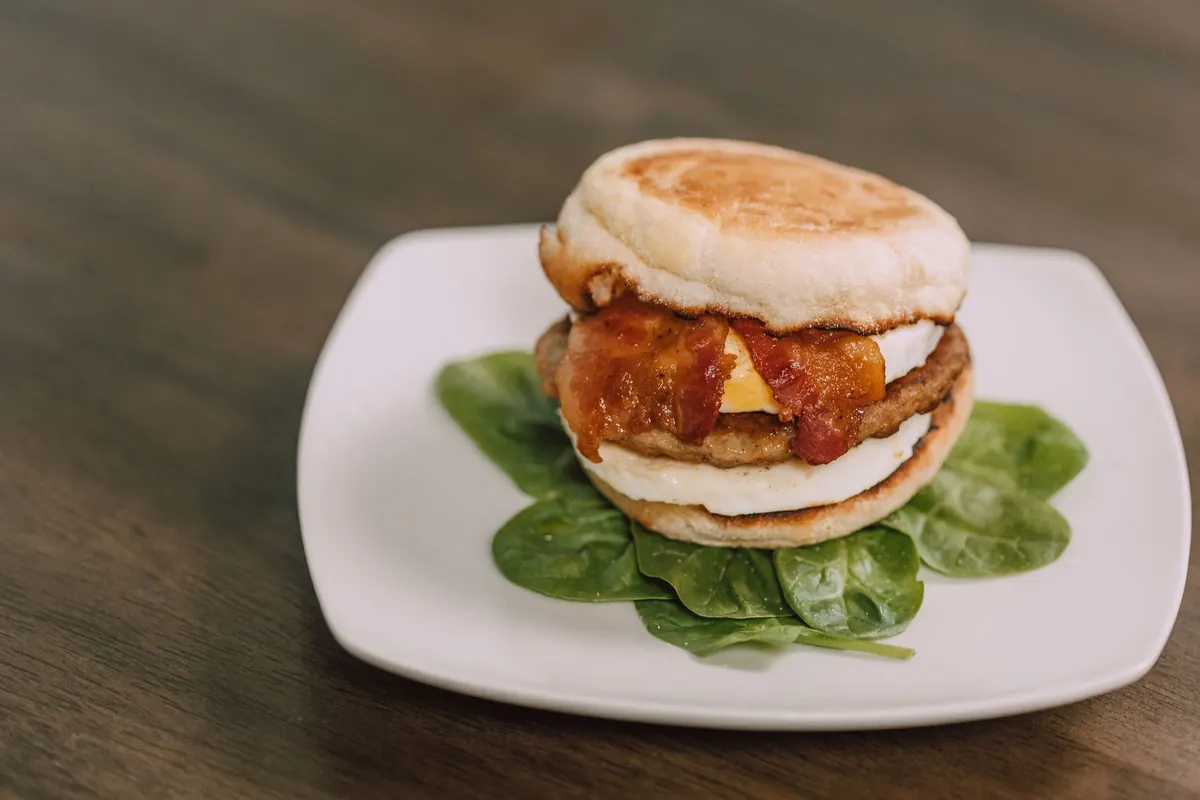
- English muffins: butter and marmalade, peanut butter, cheese melted under the grill, bacon and egg, Eggs Benedict, or a fried egg sandwich.
- Both: keep the wet things for last. Toast, butter, then top.
Toast it properly, butter it while it's too hot to hold, and eat it standing at the counter. Everything else is decoration.
How Britain Traditionally Serves Them
The crumpet belongs to tea. It's a cold-afternoon, fire-lit, toasting-fork food: a pack of six from the shop, a grill or a fork by the fire, a pot of tea, and no ceremony beyond that. In the Midlands and parts of Wales you'll meet the pikelet, a thinner relative cooked without a ring or with a shallower one, sometimes eaten cold with butter and jam. Some households still hold that a pikelet is the only proper thing to serve with a cup of tea at four o'clock.
English muffins are more complicated than the name suggests. In Britain they're rarely the default breakfast — that role belongs to toast, cereal or a full fry-up. The muffin shows up as a tea-time bread: split, toasted, buttered, sometimes with jam, occasionally topped with cheese or a poached egg. The breakfast muffin sandwich, stacked with egg and sausage, is an American export that Britain has happily adopted but didn't invent. Visitors also get caught out by the word itself: ask for a muffin in a British café and you may get the flat griddled kind, not the sweet cake-like one, which is usually called an American muffin.
Buying, Storing and Reviving
Crumpets should feel springy and dry-ish in the pack, not damp or clinging together. They freeze beautifully, and there's no need to thaw: toast from frozen and give them a few extra minutes. For the best result, finish a crumpet in a buttered frying pan, holey side down first, until the edges crisp. Don't stack hot crumpets on a plate — they steam each other limp. A tea towel over the pile keeps them warm without the sog.
Muffins keep well in the freezer too. Split them before freezing if you can, using a fork rather than a knife: push the tines in around the equator and prise the two halves apart. A knife gives you two flat, sad surfaces; a fork gives you the crags that make the thing worth eating. Refresh under a grill or in a toaster, cut side towards the heat.
Getting It Right at Home
If you're making either from scratch, keep the expectations straight. Crumpet batter wants to be wet and bubbly, and the rings need greasing and preheating on the griddle before the batter goes in. Muffin dough wants to be firm enough to roll and cut, and the rounds need a second rise before they hit the pan. Neither is difficult; both punish impatience.
- Warm the plates and get the butter out first.
- Toast until the surface is properly coloured, not merely warm.
- Butter immediately, while the heat can still do its work.
- Add toppings only once the butter has settled.
- Eat straight away. Neither one improves by waiting.
Choose by mood as much as by recipe. A crumpet is for slow afternoons and melted butter; a muffin is for building something substantial. Buy a pack of each, and you'll never be caught out by a rainy Sunday again.
Photo: RDNE Stock project / Pexels